

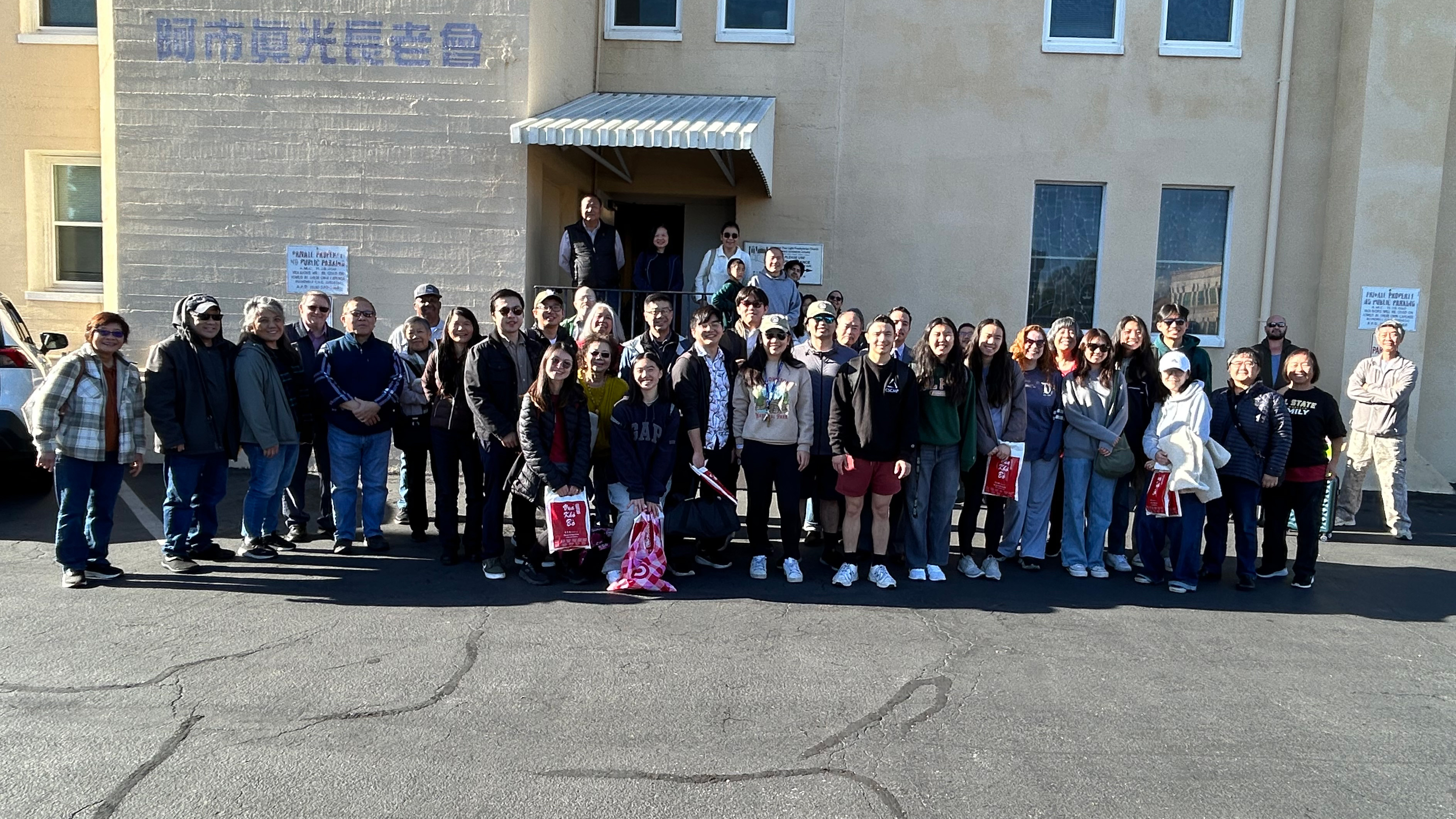
At Alhambra True Light Presbyterian Church in Southern California, it wasn’t that people didn’t care about young people.
It was that many simply didn’t know them.
“Adults don’t realize these youth go to the same church,” Lillian, a volunteer with young people, said. “Because they never see them.”
For years, the faith community—like many others—functioned in quiet silos. A multi-lingual, multi-cultural church with Cantonese, Mandarin, and English congregations, each group faithfully did its part. But across generations, there was little overlap. Youth had their spaces. Adults had theirs. Faith formation was happening—but not together.
It was a familiar model: hire a youth worker, let them take care of the youth, and the rest of the church can focus elsewhere.
But as Lillian participated in a TENx10 Whole Church cohort centered on the Faith Formation Framework, one idea unsettled her in the best way.
If faith is meant to be shared across generations, how can that happen if adults and young people don’t even know each other?
That question didn’t lead to a big, complicated strategy.
It led to a boba tea shop.
A Small Experiment That Changed Everything
Lillian cast a simple vision: invite adults and students to a boba night, and create space to get to know each other.
She didn’t know what to expect.
More than 60 people showed up.
Many were meeting for the very first time.
That evening was wonderfully ordinary, with simple games, conversation prompts, introductions, and smiles filling the room. But beneath the surface, something meaningful was unfolding.
Adults who had attended church for years were suddenly face-to-face with students they had never noticed. Students who were used to staying in their own circles found themselves laughing with adults who genuinely wanted to know them.
The goal was simple: learn a name, remember a face, notice a story.
The following Sunday, Lillian asked the young people what they remembered.
“Oh yeah—that’s Lisa, and she likes lemons.”
It was small. Almost easy to miss.
But it mattered.
Because relationships often begin with something as simple as being noticed.
“You can’t be in a relationship if you don’t know each other,” Lillian said. “So you have to get to that place first.
Because once people know each other, they want to keep showing up.
From Proximity to Prayer
When the Alhambra True Light hosted a back-to-school prayer night, many of the same adults returned – this time to listen, to pray, and to walk alongside young people as they stepped into a new school year.
Even more surprising, adults who had missed the boba night came too. They had heard about the warmth and connection and didn’t want to miss out again.
This time, the conversations deepened.
Students shared anxieties about new schools and transitions. Adults listened carefully. Then they prayed together.
What had started as a casual conversation was becoming something more intentional.
Relational discipleship had begun to take root.
And it didn’t stop there.
When the Whole Church Joins In
That same spirit carried into a larger moment: sending 17 young people to a national missions conference.
To build deeper intergenerational relationships, older adults from the congregation committed to praying regularly for individual students over time. Not out of obligation, but out of eagerness.
“They weren’t hesitant,” Lillian said. “They were excited.”
One of those pairs included Michael, a young person who serves in the church’s Audio Visual ministry, and his prayer partner, known affectionately as Uncle Dave—a man in his 80s with the joy and energy of a man decades younger.
Uncle Dave prays for Michael.
And Michael, in turn, pours into middle school boys—teaching them AV, mentoring them patiently, and connecting with them far beyond the task at hand.
It’s discipleship flowing across generations:
from an 80-year-old prayer warrior,
to a young person,
to middle schoolers just beginning to find their place.
And it’s contagious.
Students aren’t just being prayed for, they’re praying for the adults too. What began as one-directional care has become mutual spiritual investment.
Across language groups, the ripple effects are beginning to take shape.
At a fundraising lunch hosted by young people, members from the Cantonese congregation—many of whom didn’t even know the youth—showed up with enthusiasm and generosity.
“How can I support what the young people are doing?” they asked.
Mandarin-speaking parents, who often felt powerless to guide their English-speaking children spiritually, began offering rides, meals, and support, grateful that someone was walking alongside their kids.
What used to be “your ministry” and “my ministry” is becoming something shared.
A whole congregation stepping in.
A whole faith community showing up.
A Shift You Can’t Program
What’s happening at Alhambra True Light isn’t the result of a new curriculum or a perfectly executed strategy.
In fact, Lillian is quick to deflect any credit.
“I didn’t even know what TENx10 was,” she said. “ This is not me. This is God at work.”
And perhaps that’s exactly the point.
Because the real story isn’t about a successful event.
It’s about a shift in ownership.
A growing conviction that the faith of the next generation is not the responsibility of a few—but the calling of the entire faith community.
It’s happening slowly. Even now, Lillian notes that leadership-level change has lagged behind what’s happening on the ground.
But even that is beginning to change.
At a recent elder meeting, leaders asked how they could support young people in their faith as they returned from the conference..
“WOW, God!” Lillian said.
Because this is how transformation often works. Not top-down. But seed by seed. Conversation by conversation. Relationship by relationship.
The Story Behind the Story
What began with boba has become something much bigger.
Young people are known.
Adults are engaged.
Faith is being shared through relationships marked by presence, prayer, and care.
And one local church community is rediscovering what becomes possible when the entire body embraces responsibility for the next generation.
Because when faith is truly prioritized by the whole community, relational discipleship doesn’t just happen.
It multiplies.