

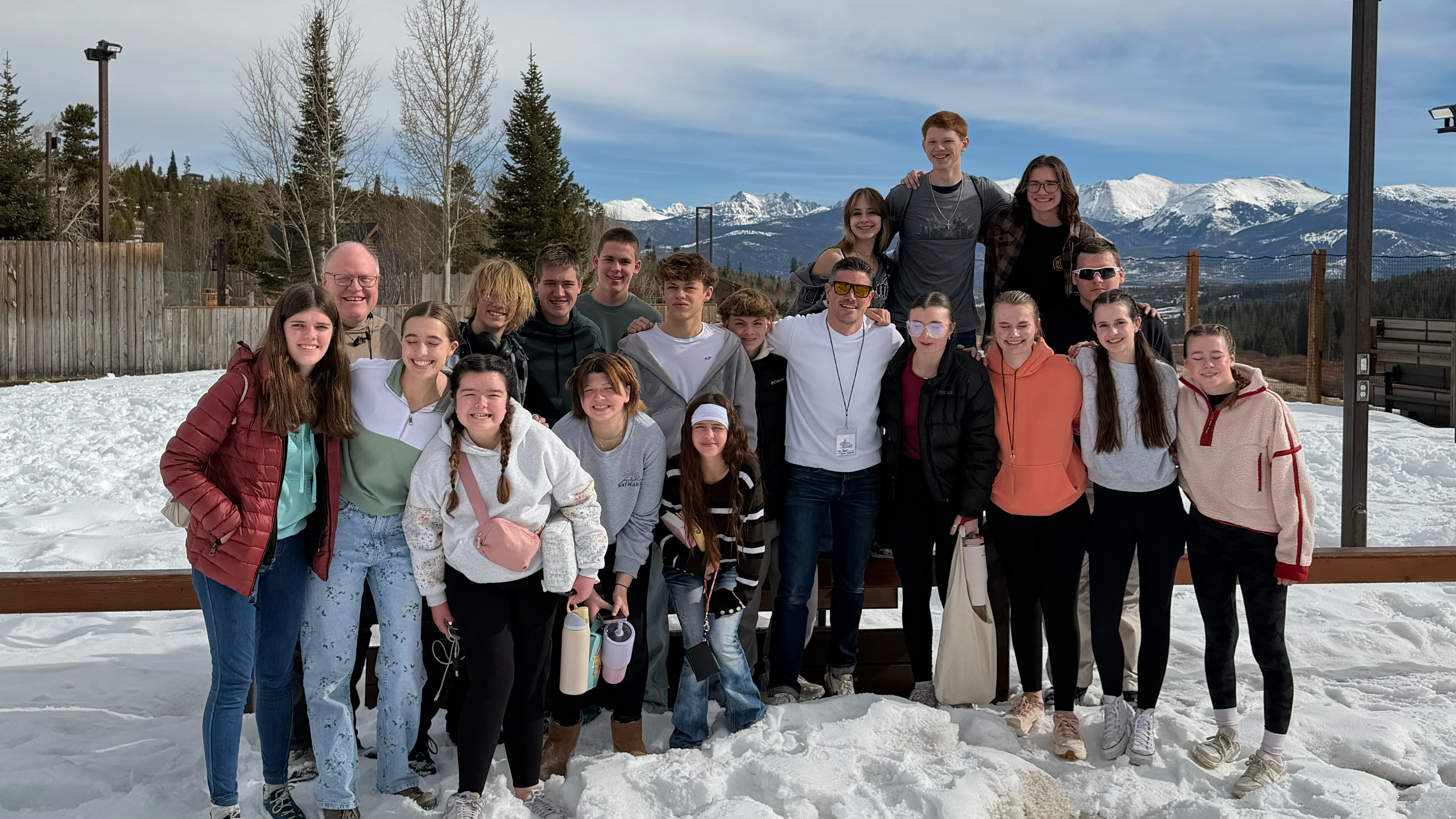
When Sean Switzer arrived at South Fellowship Church in Littleton, Colorado, he inherited a youth ministry struggling to find its footing. The congregation had cycled through four youth pastors in four years and was still recovering from the disruptions of COVID.
A vision began to emerge for Sean: change the idea of an isolated youth ministry program by merging youth within the whole life of the church.
“I wanted to integrate our young people back into the rest of the church body in a meaningful and intentional way,” he says.
But first came a bigger question: what actually grows the faith of youth?
The Discovery That Changed Everything
Sean joined a TENx10 cohort run by the Youth Cartel, an organization that equips adults who minister to youth. There, he encountered a simple but challenging truth: young people need multiple caring, faithful adults consistently invested in their lives if their faith is going to thrive.
Not just youth pastors. Not just events. Real relationships.
“We had to ask ourselves: do we actually have these kinds of adults present in our young people’ lives in a meaningful and consistent way?” Sean says. “And the answer was ‘not enough’.”
So, in partnership with church staff, Sean began reshaping the culture of the ministry. The lines between youth ministry and the broader church started to blur.
“I envision it like those lines are drawn in pencil,” he says. “And I’m smudging them.”
Students began serving throughout the life of the local church — in kids ministry, worship, and small groups. Relationships between generations slowly began to grow.
But Sean still wondered: could older adults and teenagers build genuine, lasting friendships?
An Unexpected Partnership
One group immediately came to mind: South Fellowship’s prayer group – the Watchmen – made up mostly of adults in their 60s, 70s, and 80s.
Sean had once invited them to teach a short series on prayer. But what if they became something more than occasional guests?
“The more I got to know the prayer group,” Sean says, “the more certain I became it would have been a missed opportunity not to invite them into our youth space.”
The group said yes immediately. Many had already felt a strong call from the Spirit to invest in the next generation — they just hadn’t known what it could look like.
Now, once a month, they show up faithfully.
They worship alongside students, sit in small groups, share stories of faith, and pray together. Over time, simple consistency opened the door to something deeper: trust, connection, and relationships centered on Jesus.
The fruit has been remarkable.
Tom regularly speaks encouragement into students’ lives — and they lean in to hear him. Kathy, a former missionary, serves beside students at the local food bank, modeling a life poured out for others. Dell shared at a parents' meeting that his own faith had been strengthened by these young people. And when Peter, one of the older volunteers, walked into the annual youth retreat, students erupted in cheers.
One prayer group member reflected that the partnership has “opened my eyes to what young people are really dealing with” — their struggles, questions, and faith.
The Watchmen are already dreaming about how they can deepen their involvement next fall.
That’s what happens when an entire church takes ownership of the next generation.
Faith Caught, Not Just Taught
As relationships deepened, something shifted in the students themselves.
Prayer stopped being a lesson and became a lived experience. Students who had only learned about prayer began praying with and for one another. A prayer wall now fills the youth space with reminders of how God has shown up throughout the year.
Jesus was no longer just someone to study. Students could see what a lifetime with Jesus actually looked like in the adults around them.
The impact reaches far beyond youth ministry nights. Students now fill churchwide worship gatherings with energy and leadership. They read Scripture publicly with confidence. At a recent service day, more than a third of the youth ministry showed up eager to serve.
What began with only a dozen core youth has grown into a thriving community of more than 50 young people, over half of whom actively serve throughout the local church.
And perhaps the clearest sign of transformation: students are bringing their friends.
When teenagers feel genuinely seen and loved by adults who keep showing up, they want others to experience it too.
What Makes Young Faith Last
Sean is quick to say none of this happened accidentally. Creating space for relationships took intentionality and consistency.
“We’ve created the schedule around it,” he says. “But what’s really beautiful is the relationships that transcend events.”
Sean believes the missing ingredient in many youth ministries isn’t better programming
— It’s long-term relationships between young people and faithful adults.
“Faith shared by adults is one of the most important and least prioritized things in student ministry,” he says. “It connects all the dots.”
South Fellowship didn’t build its ministry around flashy strategies or big events. They built it around people who faithfully showed up.
The prayer group never launched a campaign or wrote a curriculum. They simply offered students the gift of their presence — month after month — and let them see what a life with Jesus actually looks like.
It turns out that’s exactly what the next generation was waiting for.